Abdominal migraine is most common in children and teens, and often there is a family history of migraine. Between 2 and 4 out of every 100 children have abdominal migraine, making it a fairly common condition. It is also called stomach migraine or migraine of the stomach.1-3
Symptoms usually begin between ages 2 and 10 and stop in the early teen years.1,2
Abdominal migraine from childhood to adulthood
Children and teens who have abdominal migraine are more likely to have migraine attacks as adults. One study found that 7 out of 10 children with abdominal migraine went on to have migraine attacks as an adult.2
Abdominal migraine is less common in adults but it does occur, most often in people with a family history of migraine. In both children and adults, the person is healthy in between episodes.1-3
What are the symptoms?
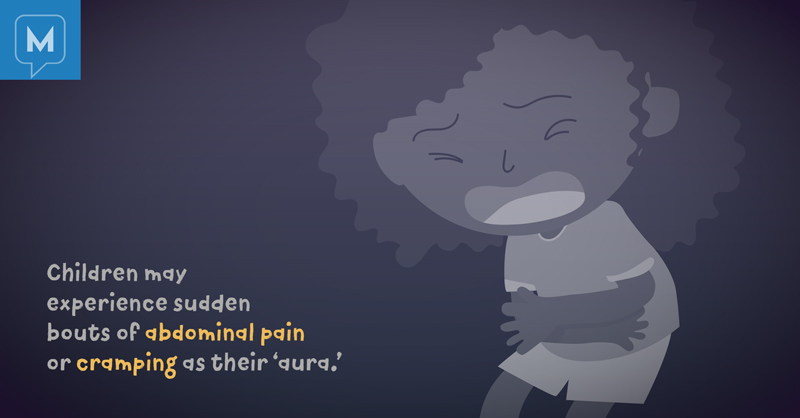
Abdominal migraine is unusual because a child has moderate to severe pain in the stomach area but no head pain. The child also does not usually have sensitivity to light or sound, have a fever, or have diarrhea. Symptoms common to childhood abdominal migraine include:1-3
- Pain felt in the general area of the stomach (non-localized) and described as dull or sore, not sharp or stabbing
- Nausea
- Vomiting
- Loss of appetite
- Paleness
How is it diagnosed in children?
Symptoms completely go away between attacks. To diagnose abdominal migraine in children, a doctor will want to first rule out infection, or digestive or kidney problems.
Treating childhood abdominal migraine
The most common treatments for children with abdominal migraine are good sleep habits, proper hydration, stress management, and avoiding certain trigger foods. Painkillers such as ibuprofen or acetaminophen may help if given early during an attack. Anti-nausea medicines can help with serious nausea and vomiting. Children who have frequent abdominal migraine attacks may be given preventive medicine.2
What if it's mismanaged?
Many doctors believe that migraine is often misdiagnosed in children, and many Migraine.com readers would agree. In Health Union’s 2018 Migraine In America survey, 2,458 out of 4,356 people said they had migraine symptoms before age 18. Of those, more than 7 out of 10 people who had migraine symptoms in childhood said they did not get effective treatment as a child. They also reported missing out on events and feeling like others thought they were faking their pain and other symptoms.
What are the common triggers?
Many people find that certain aspects of their lifestyle can trigger a migraine. This includes children who get abdominal migraine. Some common triggers include:2
- Lack of sleep
- Stress or worry
- Not drinking enough water and other liquids
- Foods high in amines or xanthines, such as banana, avocado, tomato, cheese, processed meats such as hot dogs or bacon, and coffee, tea, soft drinks
Just as with other types of migraine, it is important to keep a migraine journal to record how often and how long symptoms occur, and to find your personal triggers.
How is it diagnosed in adults?
Abdominal migraine attacks are less common in adults. Like children, adults with abdominal migraine feel healthy in between attacks. It is diagnosed by ruling out other conditions that cause stomach pain.2