Everyone experiences migraine differently. Some people feel the same symptoms with each migraine, or their symptoms may change from one attack to the next. Some people find that their migraine symptoms change over time.
How is migraine diagnosed?
There is no specific test for migraine and a diagnosis is made by eliminating other diseases. That is why tracking your symptoms will help your doctor help you.
Go to a doctor right away if you feel a sudden, severe pain, or a symptom that you have never felt before. Both could be a sign of a serious medical condition.
Common symptoms
The most common migraine symptoms are:
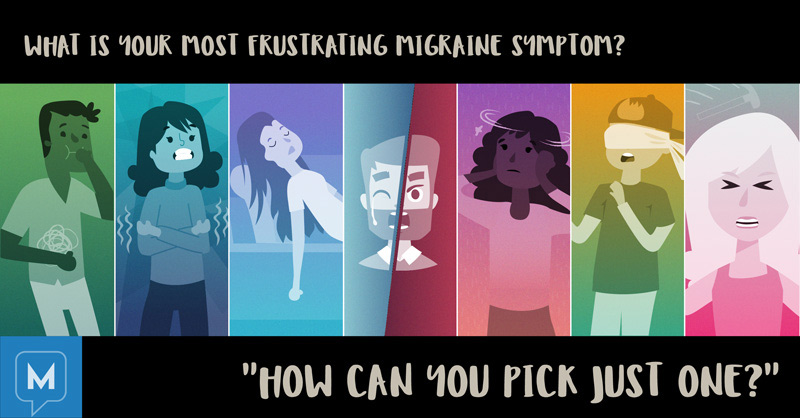
In the 2018 In America survey, more than 4,300 people living with migraine listed head pain and difficulty concentrating as the most common symptoms they felt during migraine attacks. Of those, 42 percent listed head pain as their most frustrating symptom.
Less common symptoms
Other migraine symptoms include:
Community Poll
Which symptom impacts you most during a migraine attack? (check all that apply)
Tracking migraine symptoms
Keeping a record of your migraine symptoms may help you figure out patterns and triggers to your attacks. It may be helpful to record such things as:
- When and where your pain or symptoms start
- Whether the pain spreads to your entire head or neck
- How well and how quickly acute treatment helps reduce the pain or other symptoms
- How long your pain or symptoms last
- Whether you experience other symptoms such as vision changes, nausea, or light sensitivity
Personal experiences
Migraine.com advocates frequently write about their varying and changing migraine symptoms. One advocate took to sharing her various migraine symptoms by creating "unofficial types" of migraine such as the Creeper, the Hourglass, and the Ninja to name a few. The Migraine.com community also chimes in often to share their strangest and quirky migraine symptoms. Reading about other people's migraine symptoms can help one identify their own, but it's important to remember the differences among people living with migraine.