
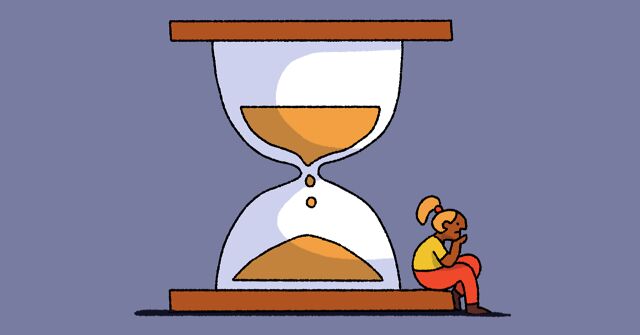


A Meandering Migraine Journey

My migraine experience has definitely shifted and changed, waxed and waned - throughout the course of my life. One of the blessings of menopause, something of which we rarely speak (!), is that my migraine attacks have now mostly stopped.
However, years of learning and observation have given me a few nuggets to pass along about the frequency pattern as I moved between episodic and chronic migraine until this time.
Intermittent vs. chronic migraine pros and cons
Believe it or not, I do actually feel that both intermittent and chronic migraine have their pluses relative to one another! When we have intermittent migraine, we ‘get some time away.’ When we have chronic migraine, we ‘know what to expect.’
There are, of course, other pluses and minuses which will be very personal to each of us-and of course we'd always rather not have migraine at all, as overall I wouldn’t count it as a positive experience.

Relishing good days and hesitating over plans
When my migraine experience was intermittent, I felt I could really relish the days I had no symptoms, obviously. And I could appreciate those days because of the contrast.
On the other hand, I was hesitant to make big or pricey plans-in case I couldn’t follow through. I went from having a break from the dizziness, nausea, and pain to having it all the time. Then back again.
But as I moved ‘forward in time,’ nausea became more prominent. It was almost the main feature as I moved toward the end of my ‘intermittent’ migraine experience. In this sense, the intermittent migraine later on in this period was much harder to manage, even though there was less pain.
When migraine was chronic, and how it eased with age
When migraine was more chronic, it was more predictable-a harsh reality. In my better moments, I had a more even-keeled focus on making things as positive as possible, which is a valuable skill to cultivate. On the other hand…I had more migraine. Not great.
Interestingly, as I got older, the frequency reduced and became more intermittent. Less frequent, less intense, less nausea. I hardly have migraine anymore-something I never realized I could look forward to!
Redefining what healing from migraine means
Everyone’s journey toward ‘healing’ with migraine is very individual. Some will only define themselves as free from migraine if they are free from pain (or insert other symptoms).
Some will define themselves as free from migraine if they can find ways to live a life that is meaningful to them while they work on the pain-free (or symptom) free part.
I found that when pain reduction wasn’t possible or was incomplete, focusing on accepting this and looking outside myself for meaningful connections and activities helped me move through those times.
It wasn’t just ‘managing’-I’d like to think that I look at it from a ‘cup-half-full’ perspective. I didn’t miss out on as many opportunities this way, as if I had if I had just hidden away. Sometimes I did-nobody is a machine-but I did what I could to avoid the avoidance, if you see what I mean.
And doing this meant my migraine journey was more rewarding than it would have been otherwise. For the most part, I wanted to make lemonade with the lemons, and drink it while it was cold. At other times, I wanted to lie there with an ice-cold cloth on my face instead. And I was okay with that too.
I did what I could to feel better, and I did what I could to drop the drama when I couldn’t.
For me, this was my way of standing over and above that uncomfortable situation. And when I could do that even sometimes, I called it a success-migraine or not.
Join the conversation